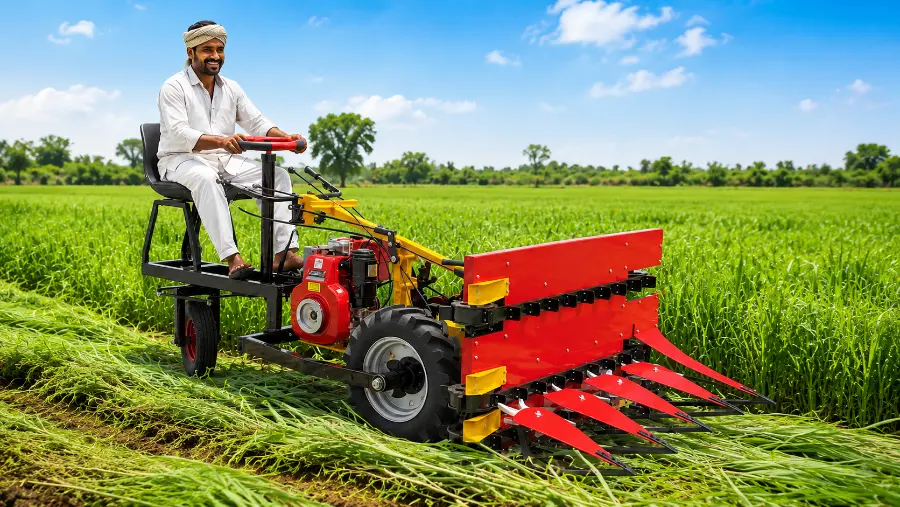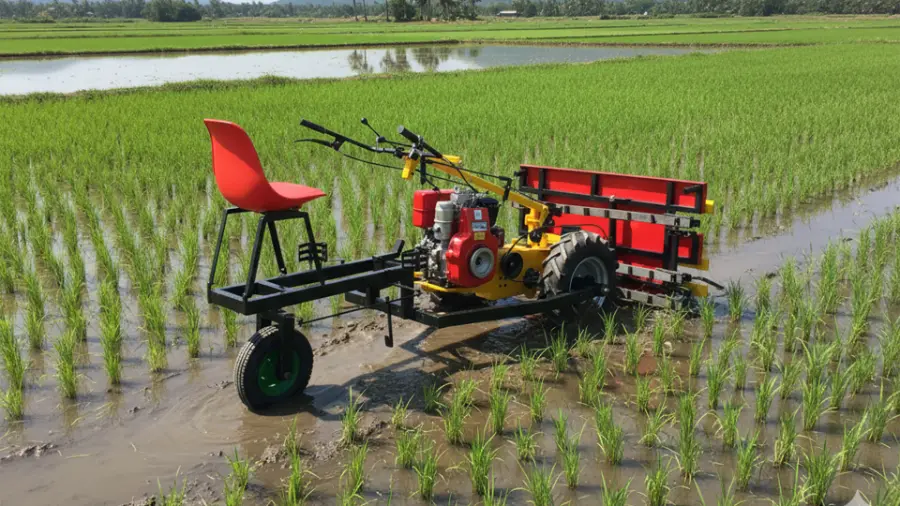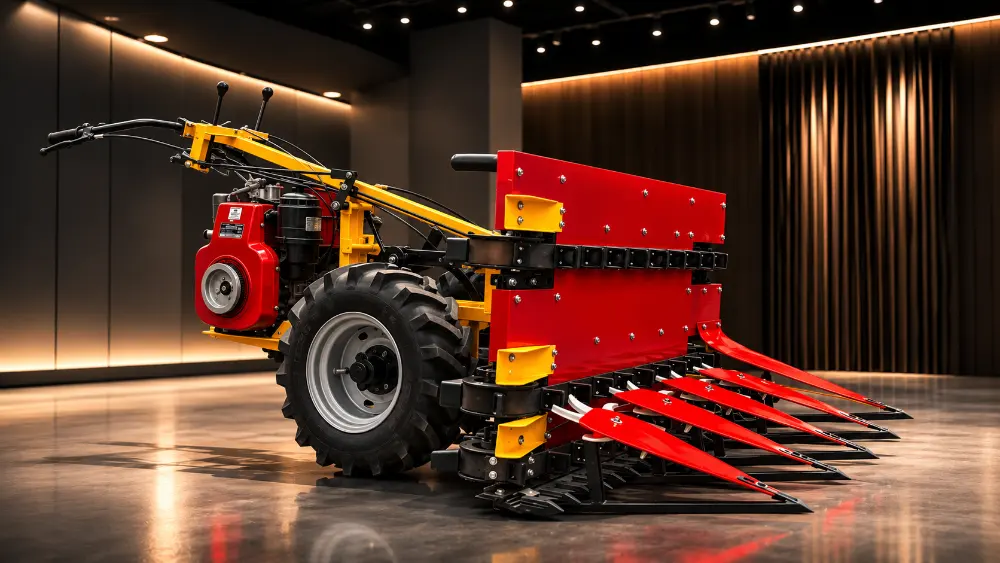
A standard reaper drives both wheels at the same speed. That is fine down the length of a row and awkward at the headland, where every turn has to be muscled around. A differential reaper lets the outer wheel turn faster than the inner one, so the machine pivots instead of being dragged.
The differential lock is the other half
A differential alone would spin one wheel in wet paddy or loose sand. The lock couples both wheels together when you need traction, then releases for the next turn. Wet fields, sandy patches and gentle slopes are where this earns its keep.
When the standard reaper is the right buy
Large, open, rectangular plots. Long rows, few turns, dry firm soil. In that setting the standard self-propelled reaper does identical work for less money, and the differential would spend the day idle.
When the differential reaper pays back
Plots under two acres. Bunded fields. Land divided among family members into irregular shapes. Fields that stay wet after irrigation. In these conditions turning is a large share of the working day, and the differential reaper usually recovers its extra cost within a season or two of saved time and reduced operator fatigue.
What is identical between them
- Two 5 hp options — Greaves diesel (3-belt) or Honda GX200 petrol (2-belt)
- 3600 RPM, TVS LM45 agricultural tyres
- 4 cm minimum cutting height, under 0.5% total crop loss
- 5 kmph average working speed
- 2.5 × 1.5 × 1 metre, mild steel construction
- Clutch lever and links mechanism control
The differential models are marginally heavier — 260 kg diesel and 240 kg petrol against 250 and 230 kg for the standard machine.
Either machine, plus a seat
The reaper seating arrangement fits both. If long harvest days are the constraint rather than field shape, the seat may be a better first purchase than the differential.
Not sure which suits your land? Tell us your plot size, crop and soil condition and we will say plainly which machine we would send. Call +91-8799656981.