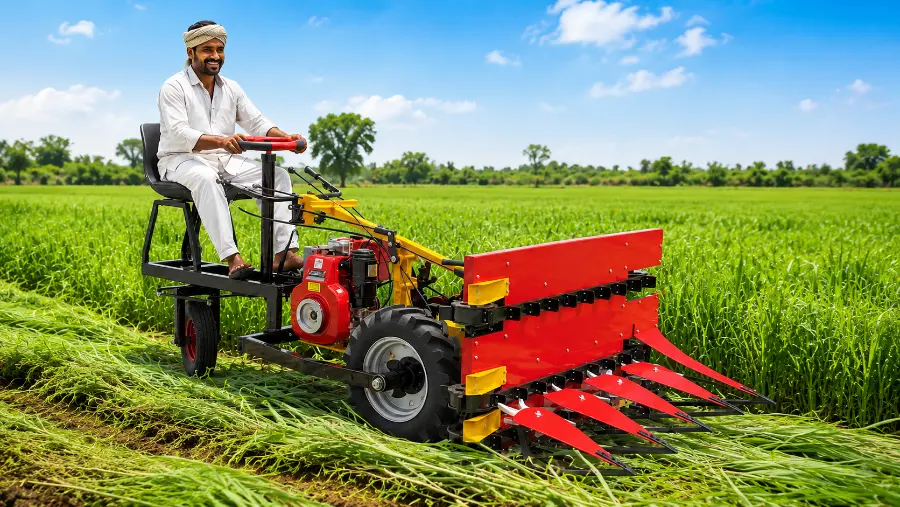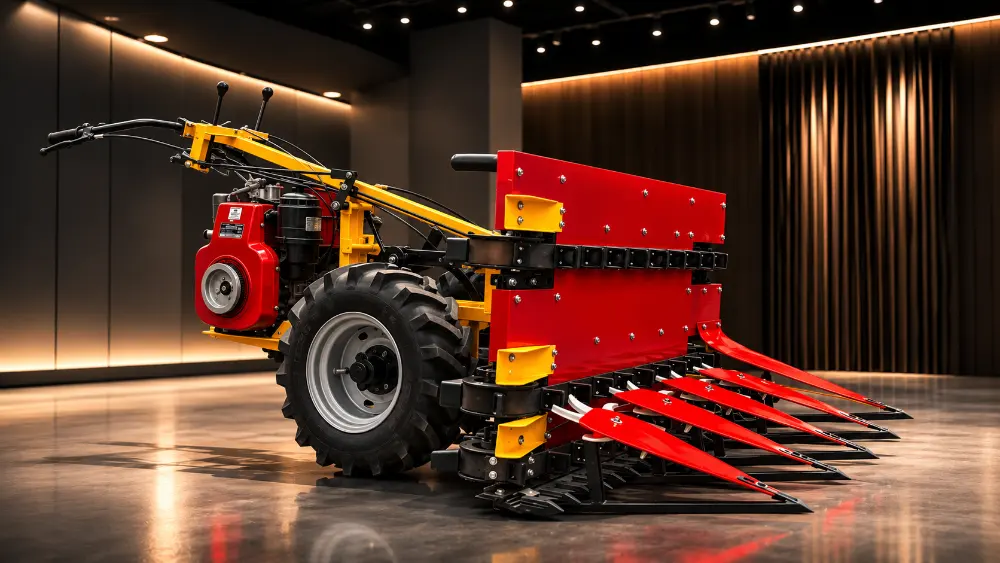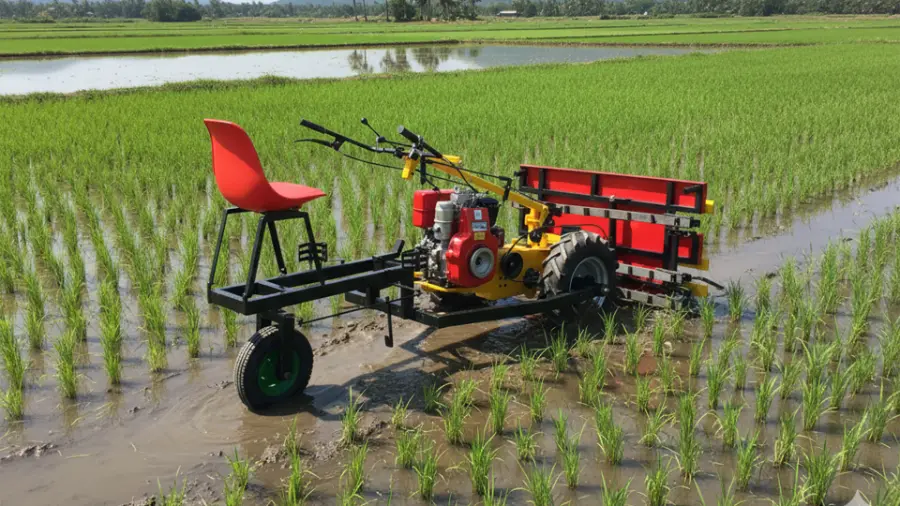
For wheat, a reaper machine has one job: cut low, cut clean, and lay the crop in a windrow you can pick up. Everything else — engine badge, colour, brochure claims — is secondary to those three outcomes.
Cutting height decides your straw income
A machine that cuts at 4 cm recovers noticeably more straw than one cutting at 10 or 12 cm. On most wheat farms that straw is not waste — it is fodder stock or a saleable commodity. Over a season, the difference in recovered straw often matters more than the difference in machine price.
Ask for the minimum cutting height in centimetres, not a vague claim about a very low cut. Our reapers are specified at 4 cm minimum.
Crop loss under half a percent
Grain shattered at the cutter bar never reaches the threshing floor. A well-set reaper with sharp, precision-ground blades keeps total loss under 0.5%. A blunt cutter bar tears the stalk instead of cutting it — that loads the engine, slows the machine and drops grain.
Match the machine to your field shape
If your plots are large, open and rectangular, a standard self-propelled reaper is the economical choice. If they are small, bunded, irregular or often wet, a differential reaper earns its extra cost: the differential lets the outer wheel turn faster on headlands, and the lock holds traction where one wheel would otherwise spin.
Diesel or petrol for wheat
Wheat rarely stands taller than four to five feet, so the lighter 5 hp petrol machine handles it comfortably and starts easily on cold mornings. Choose diesel if you will also cut taller crops like fodder maize or jowar, or if you plan to run the machine commercially for other farms.
One operator, one acre, one hour
A single operator with a 5 hp reaper covers roughly an acre an hour — work that would otherwise need a team of eight to ten people. Add a seating arrangement and the same operator can keep going through the day instead of stopping early from fatigue.
Before the season starts
- Sharpen or replace chipped cutter bar sections
- Check and tension the drive belts
- Drain fuel that sat through the monsoon
- Grease every marked point
- Run the machine unloaded for two minutes and listen for anything new
Fifteen minutes of this prevents the breakdown that costs a full working day in the middle of harvest.